
Uploading files into AEM Assets (or any DAM) is not digital asset management.
Management starts when someone can find the right asset, know whether they may use it, request the correct rendition, and retire the wrong one without a Slack archaeology dig. Adobe Experience Manager Assets is built around metadata, processing profiles, and governance for a reason: it is meant to be a system of record for reuse — not Dropbox with a CMS login.
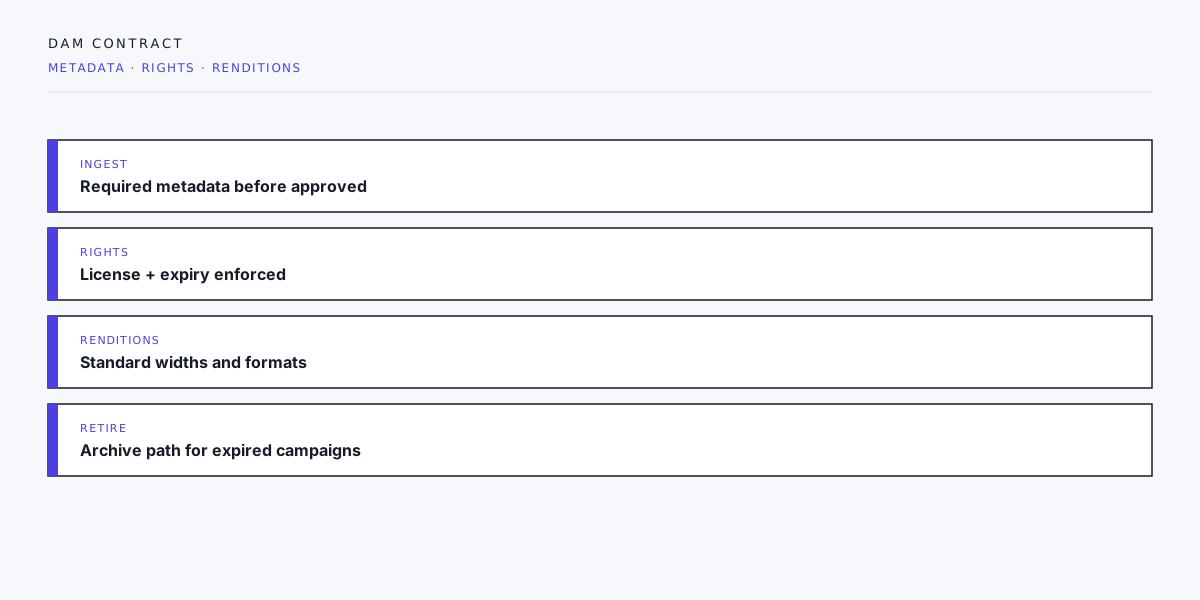
Findable. Licensable. Retirable. Otherwise it is only storage.
The contract fields that matter
| Field | Why |
|---|---|
| Title + description | Human findability |
| Tags / controlled vocabulary | Filters that stay coherent |
| Rights / license / expiry | Legal safety |
| Brand / campaign | Lifecycle |
| Locale | Correct market usage |
| Source / owner | Who answers questions |
| Approved renditions | Performance and consistency |
If rights and expiry are free-text optional, your DAM will ship expired campaigns into new landing pages.
Renditions are product
Define standard widths and formats once (WebP/AVIF with fallbacks; never 4000px heroes by default). Processing profiles should encode that policy. Authors should not invent export sizes per page — that is how Core Web Vitals die.
Folders vs metadata
Folders are for coarse tenancy (brand, year, region). Metadata is for retrieval. When everything is nested twelve folders deep and tags are empty, search dies and duplicates explode. Train authors on search first, folders second.
Governance moments
- Ingest checklist — required metadata before status becomes “approved”
- Periodic rights review — quarterly for licensed photography
- Archive/unpublish path — expired assets leave live pages
- Reference awareness — report or block deletes of assets still used on published pages
Integration with sites and Edge Delivery
Published pages should reference DAM paths (or stable public URLs derived from them), not one-off uploads per component. When Edge Delivery or Sites pull assets, the same metadata contract should travel — especially rights and locale.
Closing
Buy or implement a DAM only if you will staff the contract: vocabulary, rights, renditions, owners. Otherwise you purchased a harder place to lose the same files.
Scoping AEM Assets or a lighter DAM discipline? Start a project inquiry with how authors find images today and where rights live.
Metadata is search, not decoration
Authors will not fill twenty optional fields. Require a short set that unlocks “approved” status. Offer controlled vocabularies instead of free tags when possible. Free tags become dialect.
Train on:
- How to search before upload (reduce duplicates)
- When to request a new rights-cleared shoot
- How to pick the correct locale asset
Workflow roles
| Role | Responsibility |
|---|---|
| Uploader | Completes required metadata |
| Brand steward | Approves brand-sensitive assets |
| Legal/rights | Licenses and expiries |
| Developer | Rendition profiles and integrations |
Without role clarity, everything piles into “marketing shared.”
Reporting
Monthly: assets missing rights, assets expired but still referenced, top duplicate filenames, largest public renditions. The DAM should produce operational reports, not only storage charts.
Migration into AEM Assets
If you migrate from folders: do not lift-and-shift dump. Clean names, map metadata, set processing profiles first, then move in waves by brand or campaign.